The taking of Lea-Wilson and The Taking of Christ
Percival Lea‑Wilson’s life and death sit at a crossroads of Irish revolutionary history, personal tragedy, and an extraordinary art historical twist.
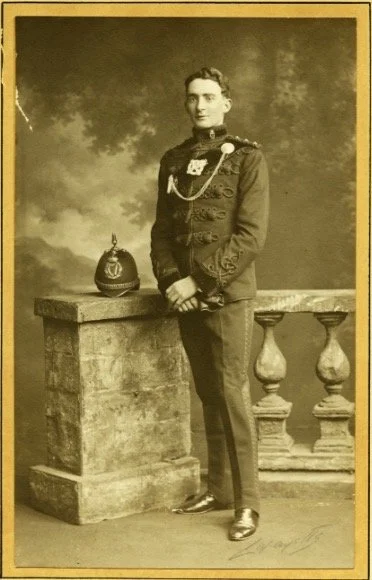
A District Inspector in the Royal Irish Constabulary, he became infamous among republican circles for his mistreatment of prisoners after the 1916 Rising surrender. Substantiated eyewitness accounts claimed he humiliated and abused detainees, including Tom Clarke, and those actions in the Rotunda gardens were never forgotten by Michael Collins and his comrades in the IRA. On 15 June 1920, Republican operatives shot him dead on the road near his home in Gorey, an act widely understood as retribution for those events. The assassination was ordered by Collins who had directly seen the abusive behaviour dished out by Lea-Wilson.
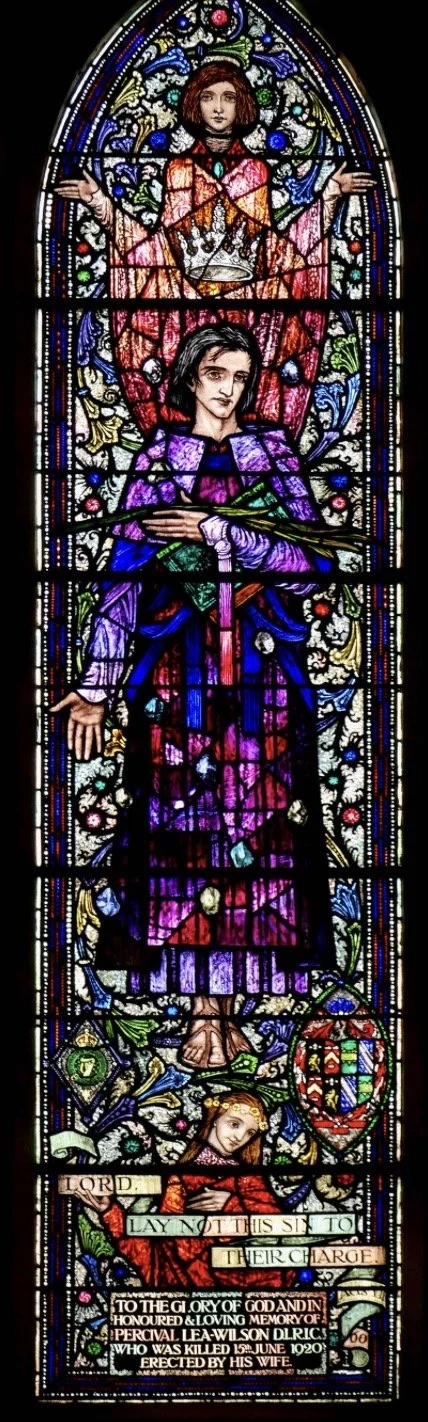
His marriage to Marie Ryan from Charleville, County Cork was itself a story of crossing boundaries. A Catholic woman from a well-known Cork family, she married the Protestant English officer in 1914 with a Papal dispensation. After his killing, Marie never remarried. She defended her husband’s reputation, insisting he had been misrepresented, and she memorialised him through a Harry Clarke stained‑glass window depicting St Stephen’s martyrdom. A plea for forgiveness is embedded in its inscription. The stained glass dedication is located in Christ Church, Main Street, Gorey, County Wexford, Y25 R267.
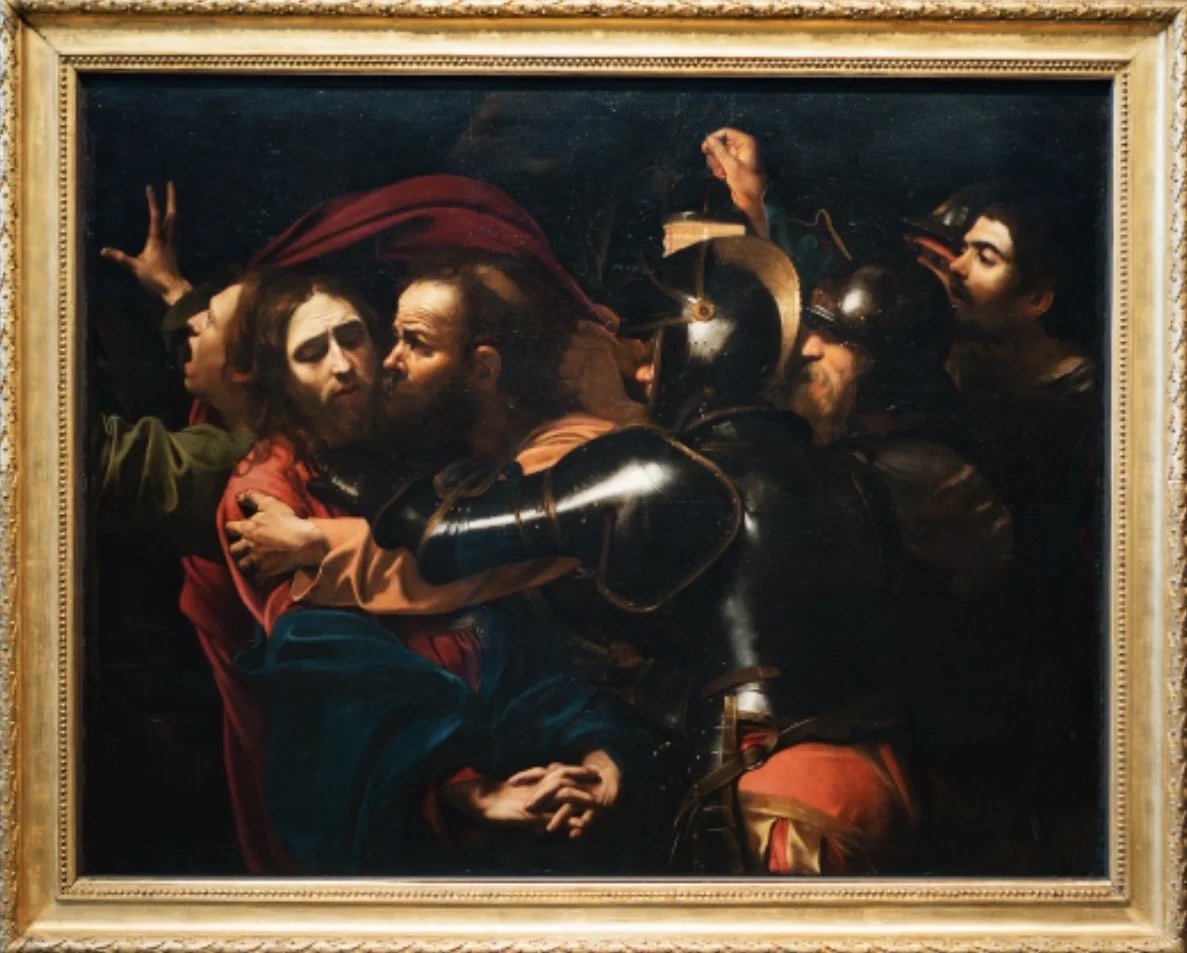
Marie’s later life brought her into close contact with a Jesuit priest, Fr. Finlay, and it was through that relationship that one of the most remarkable art rediscoveries of the 20th century unfolded. In the early 1920s, while travelling in Edinburgh, she bought a painting attributed to Gerard van Honthorst. After her death, the painting passed to the Jesuit community. Decades later, in 1990, a National Gallery of Ireland conservator, Sergio Benedetti, visited the Jesuit owned St Ignatius House of Writers, at 35 Lower Leeson Street. He noticed the work hanging unassumingly in the priests dining room. His suspicions in relation to the origins of the work proved correct and after three years of research and restoration, the painting was authenticated as Caravaggio’s The Taking of Christ (1602).
From a street in Gorey to the walls of the National Gallery, the painting’s journey is inseparable from the Lea‑Wilsons’ own story, an unexpected thread linking the violence of the War of Independence, a grieving widow, the Jesuit order, and the rediscovery of a lost Baroque masterpiece. It now hangs in the National Gallery, on indefinite loan from the Jesuits, a quiet testament to the strange ways personal histories can shape national cultural treasures.
National Gallery of Ireland - Merrion Square West, Dublin 2, Ireland
Tel. + 353 1 661 5133